
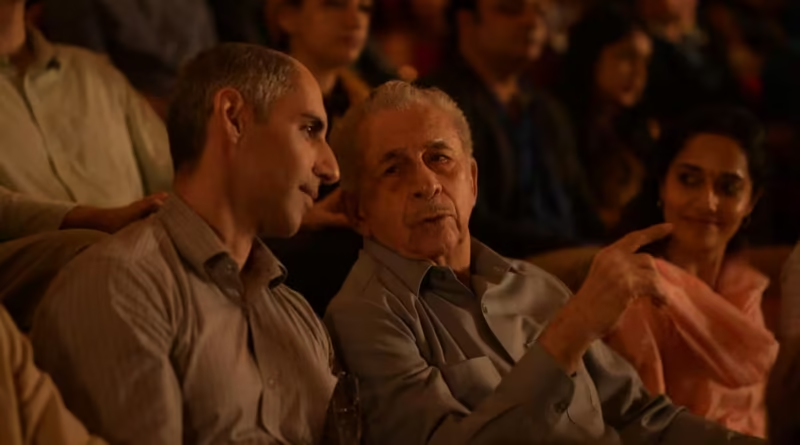
Made in India – A Titan Story Review: Jim Sarbh Is Unmissable in This Quietly Powerful Series
Made in India – A Titan Story streams now on OTT. Jim Sarbh and Naseeruddin Shah lead a gripping 6-episode series about the real people who built the Titan watch brand.
Table of Contents
Why a Show About a Watch Company Actually Works
The Story — Dreams, Doubt, and a Very Risky Idea
Jim Sarbh and Naseeruddin Shah — The Performances That Carry the Show
Direction and Period Detail — The 1980s Feel Real Here
Writing and Music — What Works and What Slows Things Down
Should You Watch Made in India – A Titan Story?
Why a Show About a Watch Company Actually Works
Be honest — when you first heard there was a web series about how Titan watches were made, your reaction was probably some version of: really? Six episodes about a watch brand?
That skepticism is fair. And it lasts for about fifteen minutes into the first episode.
Made in India – A Titan Story released on June 3, 2026, and it solves the problem most corporate dramas never figure out: it is not actually about the company. It is about the people inside it — the ones who believed in something when almost nobody else did, who pushed through bureaucracy and doubt and bad timing, and who somehow turned an idea that sounded impractical into one of India’s most recognisable brands.
By the time the sixth episode ends, you are not thinking about watches at all. You are thinking about Xerxes Desai. About JRD Tata. About what it took.
The Story — Dreams, Doubt, and a Very Risky Idea
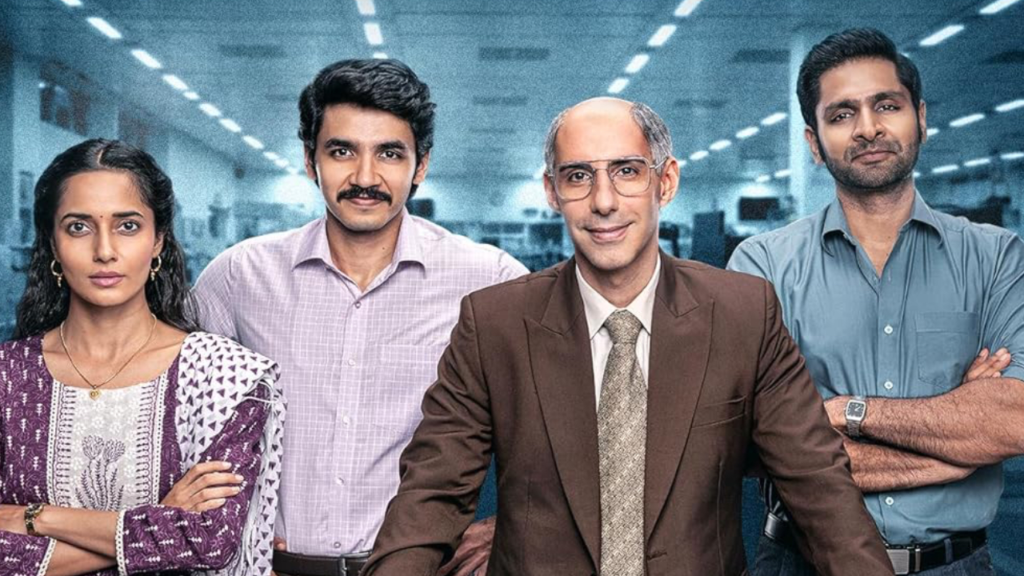
The series opens inside the Tata Group at a moment of uncertainty. Tata Press is running at a loss and the conglomerate needs new directions. Into this gap steps Xerxes Desai (Jim Sarbh), carrying a proposal that is both genuinely exciting and deeply impractical — at least by the standards of the time.
The idea: manufacture watches in India that can compete with imported foreign brands.
In the 1980s, this was not a small ask. Foreign goods carried an automatic prestige that domestic products simply did not. Getting Indians to trust an Indian watch — to prefer it over something imported — was a marketing and psychological challenge before it was even a manufacturing one.
Jahanghir Ratanji Dadabhoy Tata (Naseeruddin Shah) sees something in Desai’s vision early on, even as others in the room remain unconvinced. Where will the factory be built? Where does the technology come from? Who assembles the team? How do you win customers who do not yet believe the product is worth buying?
The series follows these questions one by one across six episodes, and it does so without turning any of them into melodrama. Desai’s wife (Namita Dube) plays a meaningful role throughout. Joy Sengupta, Kaveri Seth, Vaibhav Tatwawaadi, and others fill out the team around him. And through the character of Mastan Bhai (Rahul Dev), the show gives you a window into the parallel world of smuggled foreign watches that Titan was effectively competing against.
It is a complete picture. Not a hagiography — though it leans that way sometimes — but a complete picture.
Jim Sarbh and Naseeruddin Shah — The Performances That Carry the Show
Jim Sarbh is the reason to watch this series. Full stop.
As Xerxes Desai, he does something that sounds simple but is genuinely hard to pull off on screen: he plays the character as a human being rather than a hero. There is no triumphant music every time Desai makes a decision. There is no moment where the camera lingers on his face to tell you how to feel. Sarbh trusts the writing, trusts the audience, and lets the character breathe.
There are scenes in this series where he says nothing at all — and you know exactly what Desai is thinking. That is the mark of a performance that will be talked about long after the show stops trending.
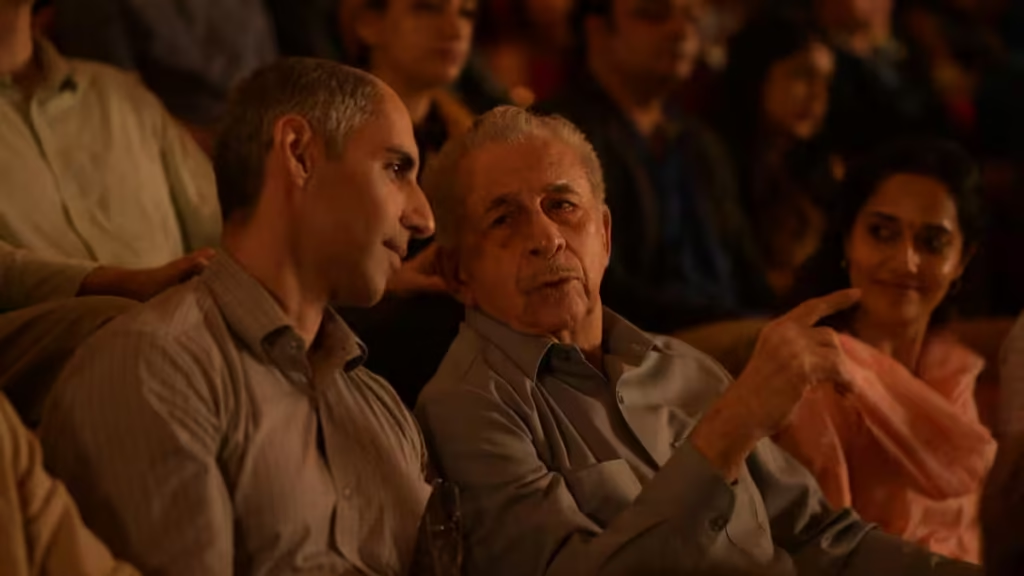
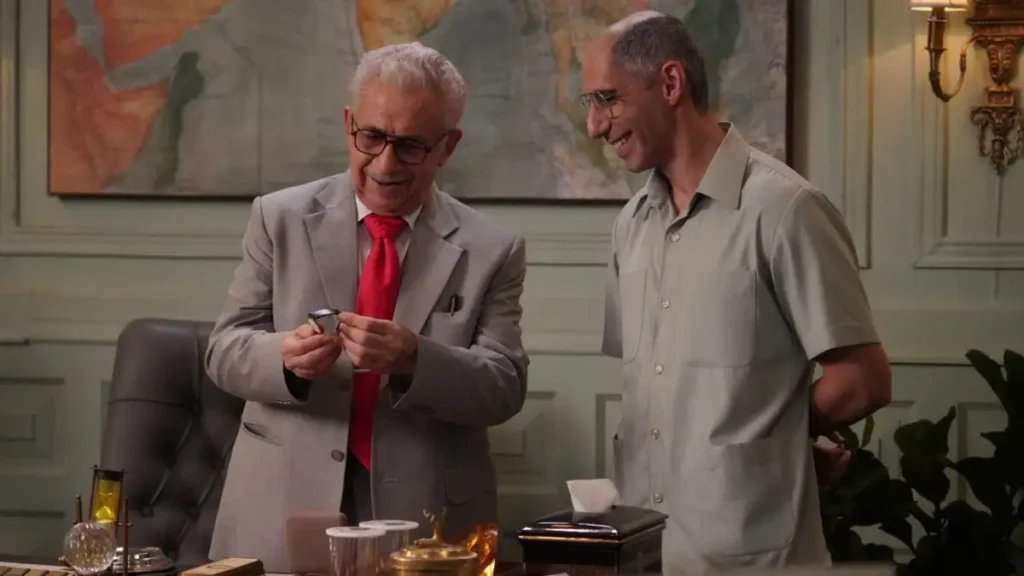
Naseeruddin Shah plays JRD Tata not as a titan of industry but as a man who knows how to listen. His scenes with Sarbh have a warmth and an intellectual weight that the show earns rather than manufactures. Shah underplays everything, and it works perfectly against the subject matter.
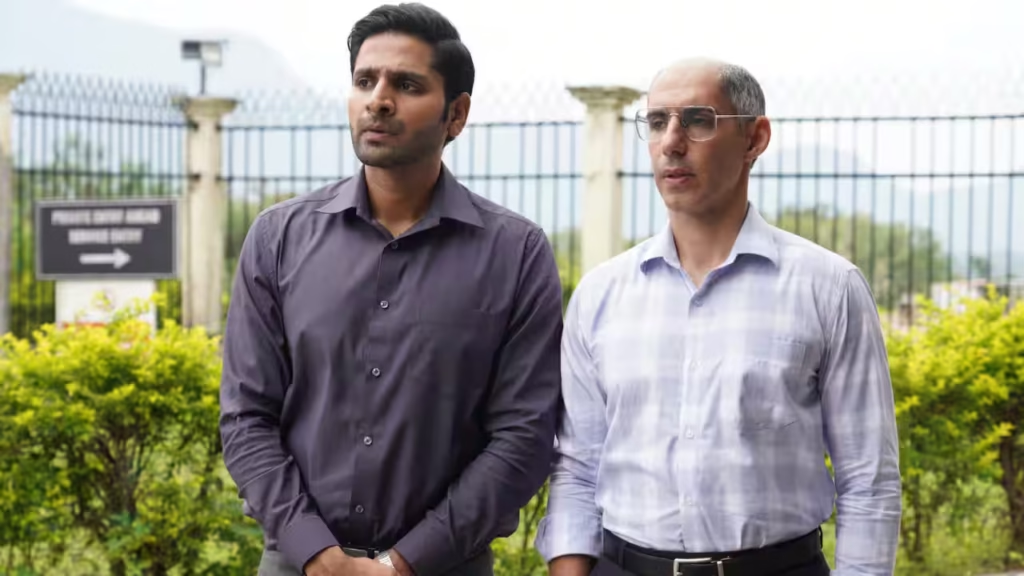
Vaibhav Tatwawaadi as Desai’s friend Akash Bansal is a genuine highlight in the supporting cast. The friendship between the two characters brings a lightness to the story that keeps it from feeling like a documentary. Namita Dube, Joy Sengupta, and Kaveri Seth all contribute more than the material strictly requires of them.
Rahul Dev’s Mastan Bhai is a small role that leaves a real impression. His track ends too quickly — which is one of the show’s more frustrating choices — but while he is on screen, he adds a texture the rest of the series does not quite replicate.
Direction and Period Detail — The 1980s Feel Real Here
Director Robbie Grewal (written by Karan Vyas, produced by Prableen Sandhu) had a specific problem: how do you make a story with no villain, no shootout, and no sensational twist feel dramatic enough to sustain six episodes?
The answer turns out to be rigour. The production design is meticulous — old offices, factory floors, government files stacked on wooden desks, machines that look like they belong to the era. The work culture of 1980s corporate India is captured without nostalgia and without mockery. It just looks like what it probably was.
The smartest decision in the entire series is the use of real archival footage woven into the drama. These moments — where documentary and fiction sit side by side — close a gap that most period shows leave open. You are watching a recreation, and then suddenly you are watching the actual thing, and the effect is quietly disorienting in the best possible way.
Writing, Music, and What Slows Things Down
The writing, credited to Karan Vyas, handles the trickiest part of a business drama well: making commercial decisions feel human. Factory licensing, brand positioning, marketing to a skeptical public — none of it becomes a lecture. It is all filtered through people making choices under pressure, which is how it should be.
The pacing, though, loses its grip in the middle stretch. The third and fourth episodes feel like they needed one more pass in the editing room. Not much — twenty minutes across both episodes might have done it — but the show tests your patience slightly before the final episodes pull things back together.
The music deserves its own mention. Old Hindi film songs woven through the narrative — Yeh Mera Dil Yaar Ka Deewana, Zindagi Kaisi Hai Paheli, Ek Din Bik Jaayega and others — feel chosen rather than placed. They match the mood without underscoring it too heavily.
And then there is the Titan tune. That simple, instantly recognisable melody. The show uses it not as background music but as identity — as the sound of something coming together. When it appears for the first time in context, it lands harder than you expect.
Should You Watch Made in India – A Titan Story?
Most people in India have owned a Titan watch, or grown up in a home where someone did. Very few know the story behind it.
That gap is what Made in India – A Titan Story fills — and it fills it well enough that the flaws do not sink it. The show tilts too favourably toward its subjects at times. Some characters deserved more screen time than they got. Titan’s iconic advertising era, which shaped how an entire generation thought about the brand, is touched on but not explored the way it could have been.
But here is the thing: none of that makes you want to stop watching.
Jim Sarbh alone is worth your six hours. Naseeruddin Shah in a quieter, more restrained mode than you usually see him is worth the time. And a story that takes you inside a world most people think they know — and shows you how little they actually do — is exactly what good television is supposed to do.
If you are tired of watching the same crime thriller with slightly different character names, this is the show to break that cycle.
Rating: 4/5
Stay connected with Soochnatantra for such latest news from the entertainment world.
