
Dalai Lama Accepts Grammy in Dharamsala — Amjad Ali Khan Delivers the Historic Award in Person
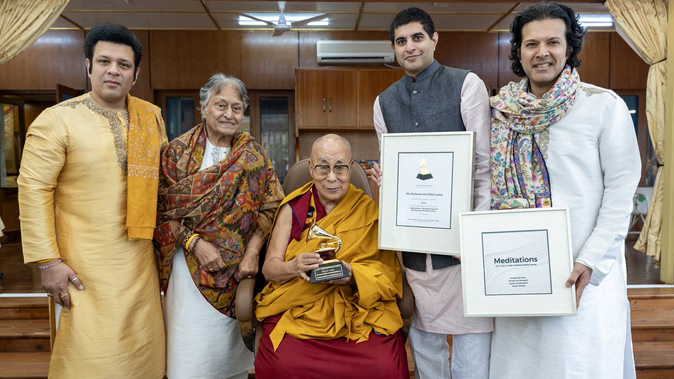
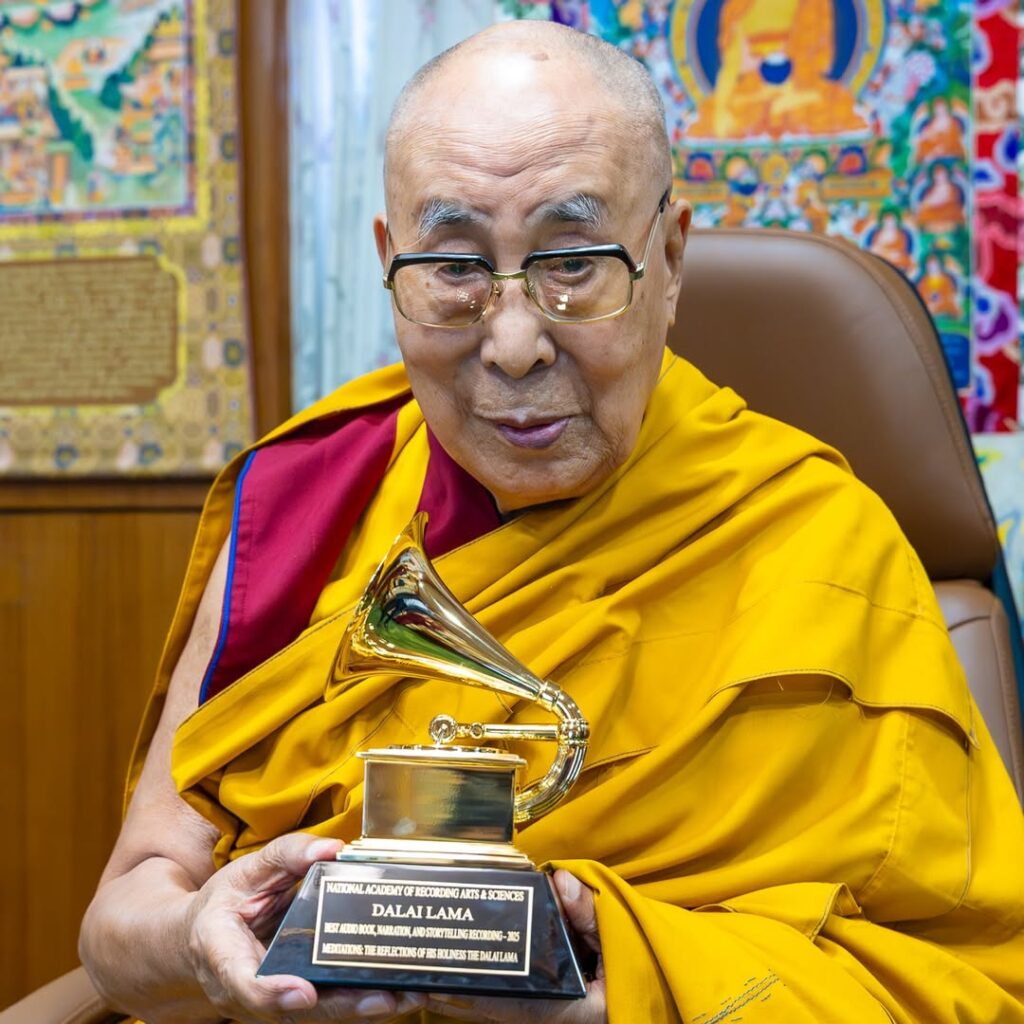
The Dalai Lama received his Grammy Award at his Dharamsala office from sarod maestro Amjad Ali Khan and sons — honouring the album Meditations for best audiobook.
Table of Contents
The Award Comes Home to Dharamsala
What Is the Grammy-Winning Album About?
Why Did Amjad Ali Khan Travel to Deliver It?
What Ayan and Amaan Said About the Moment
What the Dalai Lama Said in His Official Statement
Why This Grammy Win Is Bigger Than Music
The Award Comes Home to Dharamsala
There are Grammy wins, and then there are moments like this one.
Earlier this year, when the Recording Academy announced that the Dalai Lama had won a Grammy Award in the Best Spoken Word/Audiobook category, musician Rufus Wainwright accepted on his behalf at the February ceremony in Los Angeles. The award then made a quieter, more personal journey — all the way to Dharamsala, in the hills of Himachal Pradesh, where the Dalai Lama has lived and worked for decades.
Sarod maestro Ustad Amjad Ali Khan, accompanied by his sons Amaan Ali Bangash and Ayaan Ali Bangash, travelled to the Dalai Lama’s office to formally present the award. The ceremony was held at his residence. No red carpet, no stadium. Just a room, a Grammy, and a meeting that clearly meant something to everyone in it.
What Is the Grammy-Winning Album — and Why Did It Win?
The album is titled Meditations: The Reflections of His Holiness the Dalai Lama. It won in the Best Spoken Word Album category at the 2025 Grammy Awards.
The project brought together the Dalai Lama’s spoken reflections — on compassion, peace, humanity, and environmental responsibility — layered with sarod music performed by Amjad Ali Khan and his two sons. It is not a conventional music album. It sits at the intersection of spiritual teaching and classical Indian music, and the Grammy win placed it in front of an audience far beyond what either tradition typically reaches on its own.
The album was a collaboration years in the making. Amjad Ali Khan has long been a bridge between Indian classical music and global audiences. Pairing his sarod with the Dalai Lama’s voice gave the project a weight and reach that stands apart from most Grammy-winning releases.
Why Amjad Ali Khan Made the Journey to Dharamsala
Amjad Ali Khan did not need to travel to Dharamsala to deliver the award. He chose to.
Speaking to the media after the visit, he said: “We played the sarod alongside the voice of the Dalai Lama — my sons Amaan Ali Bangash and Ayaan Ali Bangash were part of this. That is why we came here to present this Grammy to His Holiness.”
It was a simple explanation for a gesture that said more than any speech could. The man who helped create the album wanted the person at its centre to hold the award himself.
What Ayaan and Amaan Said — and Why It Struck a Chord
Ayaan Ali Bangash, the younger of the two brothers, was visibly moved. He described the entire experience — the Grammy win, the collaboration, and the visit to Dharamsala — as something closer to a blessing than an achievement.
“Being here is a great honour for us, and we truly feel blessed,” he said. “It is like a blessing for us. We are very grateful that His Holiness gave his blessings to this project and allowed us to be a part of it. All of this has been possible because of his blessings.”
His brother Amaan Ali Bangash kept it shorter, but no less sincere: “This year we won the Grammy. God has been very gracious. All of this is because of the Dalai Lama’s blessings.”
These are not the kinds of quotes you hear at most award ceremonies. They reflect something genuine about what the project meant to the people who made it — and why it connected with listeners the way it did.
What the Dalai Lama Said: The Official Statement in Full
When the Grammy win was announced in February, the Dalai Lama’s office released a statement in his name. It is worth reading carefully:
“I accept this honour with gratitude and humility. I see it not as a personal achievement, but as recognition of our shared global responsibility. I believe that peace, compassion, care for our environment, and an understanding of the oneness of humanity are essential for the collective well-being of all eight billion human beings. I am grateful that this Grammy honour can help spread these messages more widely.”
That last line is the one that matters most. He was not celebrating a win. He was thinking about reach — about how many more people might now encounter ideas he has spent his life trying to share.
Why This Grammy Win Is Bigger Than Music
The Dalai Lama Grammy story is unusual in the best possible way. It is a spoken word album, not a pop record. It was recorded in collaboration with Indian classical musicians, not a major label. It won in a category that rarely generates headlines. And yet, the story of how the award finally reached its recipient — carried by a sarod maestro and his sons to a hillside office in northern India — is the kind of detail that stays with you.
Indian classical music rarely gets a seat at the Grammy table. The Dalai Lama’s teachings have circled the globe for decades, but rarely through a format that the Recording Academy recognises. Meditations managed both at once.
The visit to Dharamsala was also, in a quiet way, a reminder of what collaboration can produce when it is built on something real. Amjad Ali Khan did not lend his name to a project for its profile. He made music that reflected his faith in the message. His sons grew up playing instruments; they ended up playing a small part in something that now has a Grammy on the shelf.
Conclusion: A Grammy That Travelled the Right Way
Most awards go to the winner. This one was carried there by hand, with care, by the people who helped make it possible.
The Dalai Lama’s Grammy win for Meditations is a reminder that music does not have to be loud to be heard. The album reached listeners across the world through stillness — through spoken words and sarod strings, through ideas about peace and compassion that do not expire.
The award is now where it belongs. And if the Dalai Lama’s statement is anything to go by, the work that earned it is nowhere near finished.
Stay connected with Soochnatantra for such latest news from the entertainment world.
