
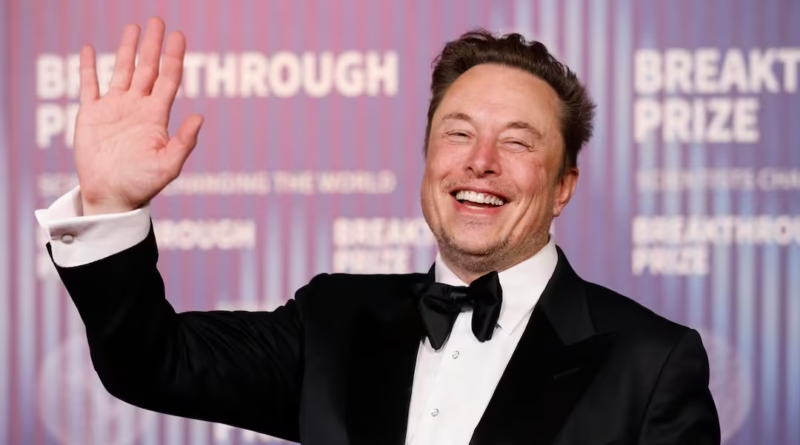
Elon Musk Is Now the World’s First Trillionaire — SpaceX’s Historic IPO Crossed the Unimaginable Line
Elon Musk became the world’s first trillionaire after SpaceX’s $75 billion IPO pushed his net worth past $1.1 trillion, reshaping global wealth rankings overnight.
Key Facts at a Glance:
Musk’s net worth (post-IPO) : $1.1 trillion
SpaceX IPO size : $75 billion (largest in history)
SpaceX stake value alone : ~$866 billion
Previous Forbes estimate : ~$780 billion
Second richest person globally (est.): ~$300 billion
Date of trading debut : June 12, 2026
Table of Contents
How Elon Musk Became the World’s First Trillionaire
How Far Ahead Is He of Everyone Else?
What Is “Muskonomics” and the Elon Premium?
Why China Was Blocked From the SpaceX IPO
What Wall Street and Detroit Actually Think of Musk
What Comes Next After the Trillion-Dollar Milestone?
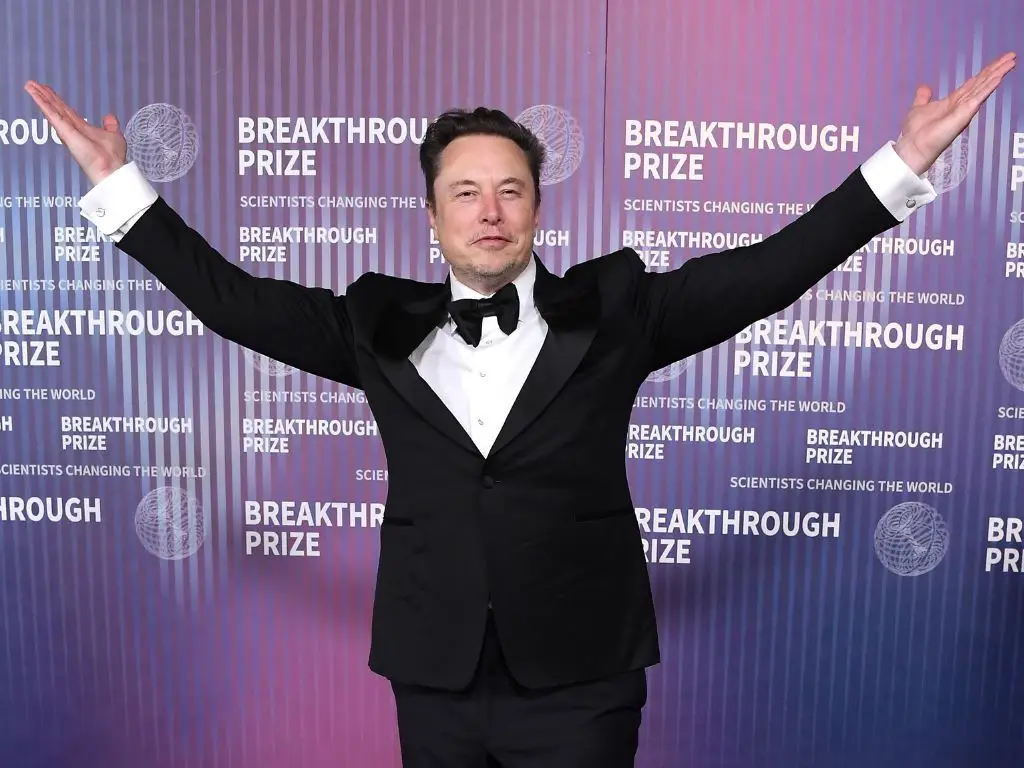
How Elon Musk Became the World’s First Trillionaire
Nobody has ever been here before.
When SpaceX began trading Thursday following its $75 billion IPO — the largest public offering in history — the arithmetic on Elon Musk’s net worth crossed a line the financial world had been watching approach for years without quite expecting to arrive this quickly. According to Reuters calculations, when SpaceX shares started changing hands Friday morning, Musk’s combined holdings across SpaceX, Tesla, xAI, and his other companies pushed his total net worth past $1.1 trillion.
That number has never been reached by a single private individual. Not Rockefeller adjusted for inflation. Not any Gulf sovereign. Not any technology founder before him. Musk is, by the conventional measure, the world’s first trillionaire.
SpaceX accounts for roughly $866 billion of that figure. The IPO raised $75 billion from public markets — a number that exceeded Saudi Aramco’s 2019 offering, which had held the record. The listing was oversubscribed within hours. Institutional demand was described by bankers close to the deal as unlike anything seen in a generation.
How Far Ahead Is He of Everyone Else?
The gap between Musk and the second-richest person on earth is not really a gap. It is closer to a different scale entirely.
Forbes Deputy Wealth Editor Matt Durot noted that the second-richest person currently sits at around $300 billion — about one-quarter of Musk’s post-IPO net worth. Before the SpaceX listing, Forbes had already pegged Musk at approximately $780 billion, well ahead of Alphabet co-founder Larry Page and other perennial names at the top of the rankings.
For context: Oracle founder Larry Ellison is the only other individual to have crossed $400 billion in personal net worth. He is now roughly $700 billion behind where Musk stands.
Most of the world’s wealthiest people hold diversified portfolios — public stocks, real estate, bonds, private equity spread across dozens of positions. Musk’s wealth is almost entirely concentrated in a small number of companies he controls directly. That concentration is precisely what allowed a single IPO to move his net worth by hundreds of billions in a single trading session.
What Is “Muskonomics” and the Elon Premium?
Analysts have been using the term “Muskonomics” for several years to describe the economic ecosystem surrounding his companies — SpaceX, Tesla, xAI, Starlink, The Boring Company — and the way investor behavior around those companies consistently defies conventional financial modeling.
The “Elon Premium” is the valuation markup investors apply to any business where Musk is the central figure. It isn’t a premium based on current cash flows or near-term earnings. It is a premium based on the belief that Musk will eventually be right — about electric vehicles, reusable rockets, AI, and whatever comes after that.
Renaissance Capital senior strategist Matt Kennedy was direct about what the SpaceX valuation actually reflects: a $1.5 to $2 trillion market cap doesn’t fit any traditional valuation method. In his assessment, it is a straightforward bet on Musk’s vision, not a forecast of near-term returns.
SpaceX is still a cash-intensive business. Several of its most ambitious programs — Starship’s commercial deployment, Starlink’s full global buildout — are years away from generating returns that would justify the valuation on a spreadsheet. Investors appear to have made peace with that, or decided the bet is worth making regardless.
Why China Was Blocked From the SpaceX IPO
The SpaceX IPO made history for a second reason, one that had nothing to do with the dollar figure.
Investors based in China or Hong Kong who tried to access SpaceX’s official share purchase portal encountered a single response: “Error 1009.” No explanation. No alternative pathway. The exclusion was total — covering Chinese mutual funds, private equity, sovereign wealth vehicles, and individual retail investors equally.
Investment adviser Grégoire Kunowski of Norman K Group called it unprecedented. In his assessment, this appears to be the first time a single issuer has categorically excluded an entire country’s investor base from a major public offering with this level of explicitness.
SpaceX’s reasoning is national security. The company’s position is that allowing Chinese investors to hold equity could conflict with the U.S. International Traffic in Arms Regulations — ITAR — which govern the export of sensitive aerospace technology, defense-related technical data, and certain software. SpaceX operates directly in those areas: rocket propulsion, satellite communications, defense-adjacent launch programs. The legal exposure was apparently clear enough that SpaceX chose a hard block over any attempt to navigate the compliance gray area. Chinese investors, regardless of portfolio size, were out.
What Wall Street and Detroit Actually Think of Musk
The controversies have not gone away. Musk’s role in the Trump administration’s Department of Government Efficiency in 2025 triggered international protests against Tesla, consumer boycotts across multiple markets, and a real decline in sales numbers. His public fallout with the Trump administration — which turned genuinely sharp before cooling — added political unpredictability to his companies that most CEOs would find unmanageable.
It hasn’t changed how major financial and industrial figures talk about him.
JPMorgan Chase CEO Jamie Dimon has called Musk “the Edison of our time” and “our Einstein.” Those are not phrases Dimon uses casually or often. Bob Lutz, former Vice Chairman of General Motors, said Musk restored the world’s respect for American automotive engineering — a statement that lands differently coming from someone who spent four decades watching that respect disappear.
When the heads of major Wall Street banks and veteran Detroit executives reach the same conclusion independently, it tends to reflect something more durable than a single news cycle’s worth of enthusiasm.

What Comes Next After the Trillion-Dollar Milestone?
The number is the headline. What changes underneath it is more interesting.
Being publicly listed gives SpaceX access to capital markets in a way that private funding rounds — however large — could not fully replicate. Starship’s commercial deployment, Starlink’s expansion into underserved markets, potential lunar logistics contracts under NASA’s Artemis program: all of these require sustained capital over years, not a single large cheque. Public markets provide that kind of ongoing runway.
For Musk’s net worth, it also means genuine volatility from here. Tesla’s history is instructive — few public stocks have moved as violently in both directions as Tesla has over the past decade, often tied directly to something Musk said or did. SpaceX shares will not be immune to that dynamic now that they trade.
What the IPO has settled, at minimum, is one question the market had been sitting with: is the private space economy real and investable? The answer, as of Friday’s trading session, is yes. And at least one company in it is worth nearly a trillion dollars on its own terms.
The trillion-dollar milestone belongs to Musk. What he does with the capital, the attention, and the platform it generates is what the next chapter is actually about.
Stay connected with Soochnatantra for such latest news from the entertainment world.
